Wednesday, June 10, 2015
Short Love Letters to the Writers of My Childhood
Dear Madeleine L'Engle: Thank you for writing Many Waters, and making sure that, when I was eleven, it was on the market with this cover. That cover, which reminded me in all right ways of a certain Mr. J.T. Thomas, was one of the most wonderful pieces of proto-sex fantasy I could ever wish for. Thank you for writing A Wrinkle In Time: despite the Jesus-y parts, which I had blocked out of my memory entirely, the book is still a really weird, fun example of science fiction for children, written as though kids are capable of grasping both scientific and metaphysical concepts. I'll never forget that image of Charles Wallace, his eyes pinwheeled into nothingness, berating his sister. It rivals 1984 for utter annihilatory creepiness.
Dear R.L. Stine: You scared the ever-loving shit out of me with Goosebumps #14, The Werewolf of Fever Swamp. My bedroom was in the basement, and my bunk bed was right in line with the ground-level windows, which meant that I spent the better part of two years waiting for werewolves to burst into my bedroom and eat me.
Dear Ann M. Martin: Bless your heart for making chapters two and three of every Baby-Sitters Club book totally skippable. Thanks for giving us Jessie, the eleven-year-old Black ballerina, and Matt Braddock, the deaf baby-sittee, and Danielle, who had cancer, and Stacey, with the diabetes. Even though these characters were as one-dimensional as paper dolls, and often defined by their differences, at least they weren't automatically punished for them. Even network TV is still playing catch-up on that front.
Dear Paula Danziger: Thank you for writing confused, angry teen characters whose anger and confusion wasn't the sum total of who they were. Parents—adults in general—are sort of fumbling around in the dark most of the time, so thank you for making your families fallible, because I learned through you that families can fall apart in more ways than just with the Dead Parent trope. Finally, thumbs up for setting This Place Has No Atmosphere on the moon, because that is a deeply silly place to set YA fiction and that makes it perfect.
Robert O'Brien: Thank you for writing both Z for Zachariah and Mrs. Frisby and the Rats of NIHM. These are both deeply weird, deeply science-driven books that I haven't read in ages, but I think about often and fondly. The cover for Z for Zachariah, in particular, is one that has stuck with me for more than two decades.
Dear Nancy Farmer: I know that a white woman setting a book in a futuristic Africa wasn't ever going to be completely the right thing, even if you did actually live and work in Mozambique. But in The Eye, The Ear and The Arm, you knew enough to treat Zimbabwe like a specific place, with its own history and culture, instead of just one panoramic view of AFRICA: PLACE OF OTHERS. It was thrilling for me to read about a place that wasn't another Sweet Valley knock-off, and Black characters who weren't marked by their blackness.
Dear Judy Blume: You are the gold standard of writing for girl children, even if my own personal experience of reading you was 80% confusion over what a sanitary belt was, and 20% skepticism over Getting One's Period as the defining moment of my teen life. So, uh, thanks?
Dear Francine Pascal: Thank you for never once explaining what the fuck a "lavaliere" necklace was, or why it was so important to have a heart-shaped face. Thanks, also, for playing into that uptight bitch/flighty bitch duality that women are assigned to. Thanks for making the smart kids ugly, too. That was great. Oh, wait: your books were soaps for teens, and they taught me that having a perfect body or money meant you could be an asshole. So thanks for nothing.
Gordon Korman: Thank you for making laugh so hard at Son of Interflux that, when I tried to read a chapter aloud to my young sister in the waiting of the dentist's office, I slid off the black leather couch and onto the floor in hysterical glee. The receptionist peered at me, and my sister, who was laughing in that helpless "I don't know what we're laughing at!" kind of way, and then pointedly ignored us. Also, your insights into Teen Dude Brain were highly valued on my end.
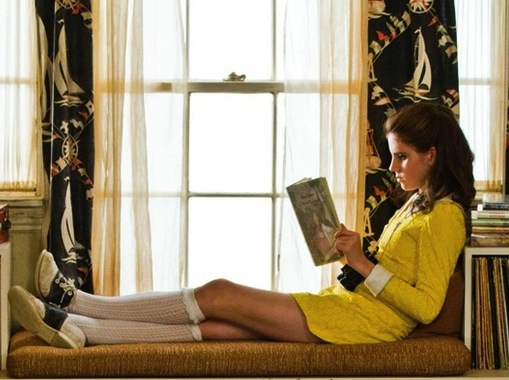
E.L. Konigsburg: Thank you one million times for From the Mixed Up Files of Mrs. Basil E. Frankweiler. Claudia Kincaid is a bad-ass bitch who is afraid of nothing except not knowing. She is fierce, determined, swoony, romantic, particular, and grim. She is a girl who is very much a girl—that is, a female character that can't be rewritten as male—but a human being first and foremost. Her adventures in the Met spawned a lovely shot in The Royal Tenenbaums, and ten million arty runaway fantasies. Your book is a puzzle, a love letter to learning, and a sly poke at well-behaved children. It is a perfect map of young adulthood, of being a girl, and learning about yourself. So, yes: thank you.
Monday, June 1, 2015
The Most Furious Road
I was not keen to see Mad Max: Fury Road. Let me be more precise: I was fascinated by Fury Road's obvious bombast and visual mayhem, but it seemed to offer the same old ultraviolence that we've seen in other movies, with an added bonus of "explicit rape culture" and "preggos in peril," two tropes that I'm actively dialing down supporting with my purchasing power. I've seen them too many times to care any more.
Since its release earlier this month, Fury Road has inspired roughly seventy billion internet think pieces. They range from the absurd MRA responses, to disabled folks being like, "Oh look, there's me!" to focusing on the climate change that might one day shove this film into the "documentary" category. Most of the articles, though, have talked about Mad Max's surprisingly feminist angle. It's unexpected, to be sure. But also? One thousand percent awesome.
Let's backtrack for a moment. The movie's visual effects are simply stunning. I had remind myself a number of times that, oh yeah, I was in a movie theatre. The cinematography is impeccable: for a movie that has dozens of car crashes and explosions, many of which happen inside a sandstorm, it's surprisingly easy to watch. None of that shaky-cam shooting style that's so en vogue with CGI-driven boom-a-thons. Just pure speed, a desert palette that easily flips from midday sun to star-flecked, and a production designer unleashed on all the tumors, nipple clamps, and silver spraypaint he could ever wish for. The movie looks insane, but it takes your breath away without trying to give you a concussion at the same time.
The plot is centered around the five young "wives" (read: sex slaves) of the repulsively leathery villain Immortan Joe, and Imperator Furiosa (Charlize Theron)'s attempt to rescue them before they bear Immortan Joe's children and are discarded, their purpose having been served. Furiosa hides the Wives in her nigh-indestructible tanker, called the War Rig, and fights tooth and nail, usually at 80 miles an hour, to make sure they're all free of Immortan Joe. She's trying to take them to "the green place," her childhood home, and presumably the last oasis in this otherwise arid world.
Max is also there.
That's not say that Max himself doesn't matter. He does, just not in the way we expect him to. Max, a role originated by racist-ass Melly Gibsons, has a certain cachet within the action/apocalypse genre. My husband pointed out that The Road Warrior, the second in the Mad Max trilogy (but the first to make a splash in North America) was pretty much responsible for what we think of as the post-apocalypse aesthetic: the black leather, the stripped-down cars, the repurposed safety gear as armor. But in this installment, the film really does belong to the women. Max is like a Trojan horse: his name got us into the theatre, but Furiosa has nearly everyone cheering.
For an action movie—actually, for any Hollywood movie—Mad Max is just chock full of women. There are fat women, old women, young women, pregnant women, disabled women. At one point, Furiosa punches Max in the face with her amputated stump hard enough to knock him back on his ass. This is not something I've seen before. In an age when Hollywood is constantly trying to one-up itself with ever-crazier fight scenes and end-of-the-world stakes (see: Transformers, Avengers, the Fast and the Furious franchise), a simple punch—albeit one that was delivered by a disabled female character—was what it took to knock me back, too.
But the feminist angle isn't just window dressing. While it's possible to imagine the film with a much more traditional cast—some burly, taciturn man rescuing those poor, lithe, perfect Wives—Charlize Theron inhabits Furiosa with, yes, fury. And intensity. And the sense that she herself might have spent some time in those gauzy linen outfits, or could have been involved in getting the Wives to Joe in the first place. It's clear that, whatever Furiosa was doing before she freed the Wives, she was part and parcel of Joe's societal machine, and she bears a burden of guilt for it. Max, as an outsider and a kidnap victim himself, is interested in freedom, but that doesn't necessarily extend beyond the borders of his own body; Furiosa, on the other hand, sees freedom as something that everyone should have. She drives for Immortan Joe. She knows his brand of crazy. She's lived with it.
And this is what makes Mad Mad: Fury Road so amazing to watch. Furiosa is pissed. The Wives are fed up. Their anger, not Max's, provides the emotional center for the film. Their decisions, not his, provide the action. It's shocking that this is shocking, but telling the stories of female victims who refuse to live inside their victimhood is just not how action movies usually go. We get plucky side characters, or romantic love interests, or, if we're in our forties, the villainess role. But to be the King Leonidas, the John McClane, the Snake Plisken? To be the ass-kicker? To be the whole point? That is fresh.
While drama is slowly ceding territory to women's stories, especially on TV, and comedy is beginning to take women seriously, this is one of the few action stories where the estrogen matters as much as the testosterone. I was wrong about not wanting to see Fury Road. I want to see more movies like it.
Saturday, May 30, 2015
Take Care!
It took me a long time to figure out what proper self-care looks like. For example, as an introvert, I didn't understand why I would come away from coffee dates or house parties feeling exhausted. Happy, of course, because I love my friends—but at the same time, it was like my own personal battery was drained down to 12%. Now, when I'm in host mode, I try to create events where everyone can kind of take care of themselves: potlucks, for instance, or weekends in the country where it's a perfectly acceptable social activity is to fall asleep on the couch with a 2013 issue of The New Yorker in your hands.
But self-care extends beyond the ability to be social in ways that appeal to you. It's also being honest with yourself: maybe week three of your awful spring head cold isn't the right time to run that half-marathon, even though you've already paid the money and bought the water-cooler fanny pack. Or maybe it's turning to your partner, or your mother, or your best friend, and saying, "Hey, can you watch the kids this afternoon? I really need some time to myself," and then doing nothing more strenuous than painting your nails. Or maybe it's registering for yoga, even though, like, four people said they'd come with you and then they all bailed. It's doing the things you want to do, because they feel good. And, it's saying no to things that will likely make you feel not-so-good.
If you're not really great at self-care, that's okay! It took me ages to figure out how to do it. I had the yes part down: saying yes to myself and doing things I like. But it took for-freakin'-ever to figure out the no part: saying no to things when I felt sad, or tired, or just uninterested. No is pretty tough to feel good about. It's starts off as an empty space, but it's one that allows you to fill it with other nice things. No is a great starting point.
Here's a crash course in self-care. Try some! Try all!
Eat some really delicious foods. If you're tired of your usual delicious foods and are suffering a crisis of imagination, try some of my favourites: smoked oysters from a can; lemon sorbet; those honey-and-sesame snaps that everyone's Grandma used to squirrel away in a cupboard; grapefruit with a little bit of sugar on top; pad thai.
When someone invites you to a social event, say, "Can I get back to you on that?" before automatically saying yes. It doesn't matter if this person is your mother, or your brother, or your boss. Go home. Check your calendar. Look at what else you're doing that week. Ask yourself, "do I really want to spend a weekend with my mother, when 90 minutes in, I'm usually wishing I was anywhere else?" (Not you, mom. I like spending the weekend with you.) If the invitation and your love of spending time with the person don't match up, suggest an alternative. Maybe a weekend with your parents isn't sometime you want to dive into; maybe an afternoon with them at the aquarium is more your speed.
Get some physical activity. There is a great Dorothy Parker quote: "I hate writing. I love having written." I feel this way about working out. In the moment, it is such a colossal drag. All that grunting and movement and breathing. Ugh! But afterwards, I love flexing my muscles in front of the mirror, or feeling okay about that bowl of ice cream. You yourself may pull a Dorothy Parker and celebrate the close of your workouts with a large glass of gin. The more I work out, the more I feel like my body and I are coming to peace. I love that it makes me feel good, and strong, and accomplished.
Take a bath. Or go for a swim. Immerse yourself in a body of water, and allow your body to float.
Read. Put your phone/tablet/phablet down and pick up a book. Or a magazine! Even if you're not a reader, per se the joys of leafing through a book, engaging with it as a physical object, can be so pleasurable. Get a big glossy art book out of the library, or pick up a splurgey magazine, or even browse your own bookshelves for those unread stories. Time spent reading is time well spent.
Walk. Anywhere. Bring a podcast or a playlist if you want, and just walk. Pick a destination, or a duration, or a direction, and be outside.
Make a list of thing you're good at. This is an awesome idea if you work at a job with an annual review, but even just seeing a list of things that you know yourself to be good at is a pretty powerful thing. Put down the big things, like communication. Put down the little things, too, like having a knack for packing boxes, or being able to dispose of spiders without killing them. Update this list whenever you need to. Read it often. Believe in it.
Make space for nothing. I really believe that overscheduling is the devil's Blackberry, and that humans are much more like housecats than we let ourselves believe. With the advent of smartphones, we can be engaged with something anytime, anywhere: in line for the bank, pooping, if our husbands go to get eggplants one aisle over at the grocery store and leave us to watch the cart for 45 seconds. Make time for yourself to do literally nothing. You won't actually be doing nothing, obviously: you might decide to take a bath, or bake some muffins, or call a friend. But leaving a little bit of space every day to just chill those brainwaves out is pretty nice.
When you say yes, mean yes. Don't mean only if something better doesn't come along or I'll do it if nobody else says yes or I'd rather not but I'm afraid of starting a fight or even this will tide you over for a few months, so okay. Yes, I know. Sometimes saying no when people are used to hearing yes can open up a conversation, and that can be uncomfortable. But also? Saying yes when you mean yes, and no when you mean no, makes you feel pretty great. Seriously. Try it.
There are other ways to do great self-care, depending on who you are and what you like. Try making something with your hands, like woodworking projects or knitting! Try meditation or contemplate movement, like tai chi or yoga. Try dates with the people you love: a standing Thursday night coffee date with your boyfriend, or a monthly book club with your black-witted girlfriends. Try cutting down on booze, or trading chocolate for cherries. Try different things. Some will make you feel okay, and some will make your soul sing. Listen carefully.
Image via Joe Webb
Thursday, May 21, 2015
Heavy Stuff
Last week I wrote about how discovering a diet that worked for me changed my life (and I want to do a Chris Traeger "lit'rally" here, because I feel strongly about this). Eating paleo was only one part of the puzzle for me, however: the other half comes, as it turns out, from weightlifting.
I've never been particularly femme or butch. Wait, do straight girls get to claim "femme" and "butch"? In either case, neither extreme has really ever rowed my boat. I've always been fascinated by supposed flaws, like gap teeth, freckles, unconventional hair colour, tattoos, and fluffy hair. But my bete noir was skinniness. Fashion models, the tiny girls in my high school, the sub-20 BMI, the size-zero jeans, the 24-inch waist: all of that was my holy grail. I wanted it so bad. To me, being skinny was being a woman. It was being unassuming in body so that my large, sometimes challenging personality was easier to swallow.
This manifested in a lot of different ways. There was the eating disorder, but in between flare-ups, I would often drag myself to the gym in the name of good health. Academically, I knew purging was bad for me, so I tried to get down to that magical waist size by working long hours on the treadmill, or hitting the Pilates classes.
Here's the thing about the treadmill: it is boring. Supremely, ridiculously boring. If you want to talk about the futility of trying to accept your body while still actively loathing it, there is no better metaphor than the Stairmaster. Climbing forever and getting nowhere; sounds about right.
Besides, going to the gym took a lot of time. There was getting there, changing, doing the stair machine, rowing furiously on the rowing machine, clambering on and off the gazelle-looking contraption, wandering around the weightlifting section like a little lost lamb, leafing through the brochures for classes, weighing myself, feeling upset, changing, and leaving. This was no lightning-ops procedure.
At some point, I got a pair of dumbells from my mom, and a weightlift-at-home DVD to go with them. It was very 1993: the hosts wore a lot of Spandex, she had a side ponytail, and he said things like, "Whew, I'm tired just watching you work out, girl!" But I would put it on once a week and follow along at home. At first, I was terrible. Anything to do with my triceps or my quads was just a gong show. But, slowly, I got better.
Scratch that: I got stronger.
And I liked that.
Turns out, I'm not alone. This article by Anna Maxymiw cites studies that show lifting heavy stuff is good for you: "A 2001 study found that college students who completed a course in weight training reported an increase in body strength, lower physical anxiety and general improvements in body satisfaction, while concurrent aerobic activity was found to have to have no effect on body image. Research from 2005 suggests that high-intensity weight-lifting is an effective treatment for older patients suffering from depression." No wonder the treadmill wasn't making me feel better. Besides, people who work out at home rather than in a gym are more likely to stick to their routine, and these days, a pair of dumbells (or even just a Pinterest board of bodyweight exercises) is enough to get me going. I do Russian twists with style, I have five different kinds of squats in regular rotation, and I've graduated from my first pair of blue plastic five-pound weights to a beauty pair of adjustable stainless steel numbers that clock in at about 14 pounds fully loaded. That's a bicep curl that you'll feel.
The outcomes of lifting weights have been pretty dope. I have visible tricep muscles! Do you even know how hard that is? I can do a chatturanga pose for ten breaths and not want to die. Instead of visible hipbones, I have visible obliques. That feels wonderful. It feels like I've made something I'm proud of. And, to be fair, while I love having visible muscles, I felt this way when I was heavier, too, when the muscles were there—and strong!—but not showing off for the naked eye. It's a feeling of knowing that I can push myself, that I am strong, that I'm more than a 24-inch waist, and that I'm proud of what my body can do. That is a rare feeling, and I will praise any path to it with my biggest, loudest voice.
A
2001 study found that college students who completed a course of weight
training reported an increase in body strength, lower physical anxiety
and general improvements in body satisfaction, while concurrent aerobic
exercise was found to have no effect on body image. Research from 2005
suggests that high-intensity weightlifting is an effective treatment for
older patients suffering from depression. - See more at:
http://maisonneuve.org/article/2015/01/29/making-gains/#sthash.ZUM6Xg3f.dpuf
A
2001 study found that college students who completed a course of weight
training reported an increase in body strength, lower physical anxiety
and general improvements in body satisfaction, while concurrent aerobic
exercise was found to have no effect on body image. Research from 2005
suggests that high-intensity weightlifting is an effective treatment for
older patients suffering from depression. - See more at:
http://maisonneuve.org/article/2015/01/29/making-gains/#sthash.ZUM6Xg3f.dpuf
A
2001 study found that college students who completed a course of weight
training reported an increase in body strength, lower physical anxiety
and general improvements in body satisfaction, while concurrent aerobic
exercise was found to have no effect on body image. Research from 2005
suggests that high-intensity weightlifting is an effective treatment for
older patients suffering from depression. - See more at:
http://maisonneuve.org/article/2015/01/29/making-gains/#sthash.ZUM6Xg3f.dpuf
Saturday, May 16, 2015
Paleotronic
There are very few things that I get evangelical about. I'm not, like, really committed to a certain genre of music, and I won't corner you at a cocktail party to expound on the benefits of registered GICs versus high-interest savings accounts (LOL, like I know what those words mean). My life moral and message is pretty much you do you, except when your choices are exceptionally stupid, in which case we go into life is a rich tapestry mode mode (and I'll definitely talk shit those choices, FYI).
There are, however, two exceptions to this rule. I'll talk about weightlifting next week, but for now, I'll just go ahead and paraphrase Nicole Cliffe: I love picking up heavy shit. I LOVE IT.
But this week, I'm going to yammer at you about the paleo diet. I know, I know: trust me, I know. And I know that anecdata is pretty much the devil's breakfast cereal when it comes to reasons to believe in something, but here's the thing: following a paleo diet pretty much works for me.
I first started the paleo "thing" three years ago, when I was a good thirty pounds heavier and getting sick every time I ate. My stomach would seize up, and it would be an agonizing cycle of constipation, bloating/gas, and then horrible diarrhea. TMI! But also, my skin was this like, gray colour? And I had had acne for fifteen years? And my farts smelled like something was literally rotting inside me. So, yeah, TMI. But I want to make it crystal clear how foul it was to live inside my body.
When I first read about paleo, I dismissed it as one of those eliminate diets that promise its adherents the moon (but like an hourglass moon instead of a fatty full moon), but in reality is just an eating disorder with a fancy name. Besides, I had tried the gluten-free thing. I had tried giving up lactose. I had tried a low-calorie approach, and its sister, low-fat. Nothing worked. I was still puffy, I was still farting, and I was pretty sure paleo wasn't going solve those problems. After all, nothing else had worked.
For those of you who had never heard of paleo, it's your basic low-carb/high-fat and -protein model, based on the idea that our modern diets have evolved far faster than our ostensibly cave-man guts. Agricultural inventions of the last 10,000 years—things like grain crops, for instance—don't jive with our digestive systems, which evolved over hundreds of thousands of years. The science is a little iffy; for example, humans have developed the capacity to eat dairy only in the last 7,000 or so years, but it's definitely there. Anyone who can drink milk can raise a glass to evolution.
On the other hand, one might argue that the basic tenets of the diet have been borne out by nutritional research (eat whole foods, eat protein, eat vegetables), and that trading cheeseburgers and chocolate croissants for sweet potatoes and red peppers is actually a step in the right direction. And! Even nutritionally clued-in modern humans are pretty bad at figuring out where calories come from. Like, there are 170 calories in two slices of bread, which is roughly the same as an entire can of tuna, and about double the calories in a large navel orange. Grains are a good source of fiber; two slices of bread have about four grams of fiber. But a half-cup of raspberries offers the same amount for one-fifth the calories. It's not like two slices of bread will make a person feel fuller than a teacup full of raspberries, but it's good to be able to wave vaguely at these basic nutritional considerations.
Anyway, I cut out grains, upped my protein levels, and immediately noticed a difference. I lost a whole pile of weight, but I also just felt better in my body. I slept better, I pooped on the regular, my skin cleared up. It was sort of amazing. Over the last three years, I've slid into a lazy-girl's paleo diet: I eat protein at every meal, I load up on fruits and veggies and nuts, and I try to avoid grains. I try to sneak fermented foods in as often as possible, since our gut bacteria is a delicate biome and I have stomped on mine. I like kale. I like kimchi. I like almonds as an afternoon snack, and an egg every morning for breakfast. I eat avocados in bulk.
I also make sure to eat cheesecake and maki rolls if and when I want to, because eating for pleasure is a hard thing to learn after over a decade of treating some foods as inherently evil, and others as "good food." Food is food: sometimes it messes with us, and sometimes it's good for us. And sometimes, eating something that I know will have digestive repercussions is a once-in-a-while treat, because why would Jesus invent chocolate cake if He didn't want us to eat it?
My moral and message is this: it worked for me. It may not work for you! It may turn out that your body is really turned on by, like, yogurt and rye bread. That sounds delicious and amazing. But if you are currently trapped in a body that makes you feel like shit, trying some really old-fashioned eating habits might help. And if not: hey, there are worse things you can do to your body than fill it full of avocados and chicken. I am so happy that I tried this "paleo thing," because it allowed me to come to peace with my body: how it felt, how it looks, and how I feel when I live inside it. That's a victory.
Besides, buying vegetables and meat means I spend so much less time reading the nutritional information on the back of the package. There just is no package. Bliss.
Saturday, May 9, 2015
Lightening
Liz and Abe and I met up and got Korean brown-sugar pancakes and sat in Christie Pitts, and I got my first sunburn of the year. It was two PM on a Thursday, a random day where the three of us could meet. We all work full-time or nearly that, but freelancing and shiftwork and an academic schedule and the stars aligning meant that there were brown sugar pancakes to be eaten, and soft grass to be sat on.
The next day, I woke up early and took the bus to Guelph for work. Biking to the bus station, I stopped to take a picture of the day's beautiful sunrise—pinks and purples and orange, splashed across the sky like a hippie's tie-dyed dream. Later that day, after taking the Byzantinely routed, slow GO home from Guelph, I walked back to the bus station at dusk, and the sky was stained again; this time deep indigo and purple, faded from silvery clouds.
It's these moment, these times, when I feel so happy.
Quitting my job turned out to be a good decision in nearly every way possible, but I wasn't anticipating these moments of feeling joyfully like myself. The freedom to sit in a park, the ability to rise with the sun. Damn. It feels good. It feels correct. It feels like I can breathe again.
And it's more than things like Saturday night—us, eating duck in a friend's backyard, a rich feast of mango guacamole and kale salad, capped with an improbably perfect McCain Deep 'N' Delicious chocolate cake. The five of us sat under the night sky and talked about what we would do if we had infinite power, prison reform in America, and the philosophy of True Detective. Previous Saturday nights like this have happened, and what has ruined it is that another bummer Monday morning is coming up soon. But as this one unspooled, I felt no urge to hide away the part of myself that felt lousy. That part just didn't make an appearance.
Stress is like that. It's not confined to the space we think it takes up. It leaks, and that oozes into every corner of the day. I remember coming home from my last job and bursting into tears as soon as I crossed my threshold. I was so tightly wound from the effort of not saying the things that needed to be said that I literally felt like I was outside my body. Towards the end, I started to dissociate at work—to feel like my life was nothing more than a slightly insane television show, and I was trapped. But now I feel like I'm having a spiritual crisis in reverse: as though maybe, knock on wood, and sort of against the odds, things are starting to come together. I feel these huge sweeping moments of joy, and after so long, they're unexpected and amazing.
I've never been pregnant, but I've heard about "the lightening," the moment that the fetus starts to drop down, away from the ribcage and towards birth, and the mother can breath again. Usually about two weeks before labour begins, it's been described as the feeling that she can take her first really deep breath in months. And it means something big is coming down the pipeline.
The next day, I woke up early and took the bus to Guelph for work. Biking to the bus station, I stopped to take a picture of the day's beautiful sunrise—pinks and purples and orange, splashed across the sky like a hippie's tie-dyed dream. Later that day, after taking the Byzantinely routed, slow GO home from Guelph, I walked back to the bus station at dusk, and the sky was stained again; this time deep indigo and purple, faded from silvery clouds.
It's these moment, these times, when I feel so happy.
Quitting my job turned out to be a good decision in nearly every way possible, but I wasn't anticipating these moments of feeling joyfully like myself. The freedom to sit in a park, the ability to rise with the sun. Damn. It feels good. It feels correct. It feels like I can breathe again.
And it's more than things like Saturday night—us, eating duck in a friend's backyard, a rich feast of mango guacamole and kale salad, capped with an improbably perfect McCain Deep 'N' Delicious chocolate cake. The five of us sat under the night sky and talked about what we would do if we had infinite power, prison reform in America, and the philosophy of True Detective. Previous Saturday nights like this have happened, and what has ruined it is that another bummer Monday morning is coming up soon. But as this one unspooled, I felt no urge to hide away the part of myself that felt lousy. That part just didn't make an appearance.
Stress is like that. It's not confined to the space we think it takes up. It leaks, and that oozes into every corner of the day. I remember coming home from my last job and bursting into tears as soon as I crossed my threshold. I was so tightly wound from the effort of not saying the things that needed to be said that I literally felt like I was outside my body. Towards the end, I started to dissociate at work—to feel like my life was nothing more than a slightly insane television show, and I was trapped. But now I feel like I'm having a spiritual crisis in reverse: as though maybe, knock on wood, and sort of against the odds, things are starting to come together. I feel these huge sweeping moments of joy, and after so long, they're unexpected and amazing.
I've never been pregnant, but I've heard about "the lightening," the moment that the fetus starts to drop down, away from the ribcage and towards birth, and the mother can breath again. Usually about two weeks before labour begins, it's been described as the feeling that she can take her first really deep breath in months. And it means something big is coming down the pipeline.
Wednesday, April 29, 2015
Broke
The longer I live in Toronto, the more I feel a general sense of irritation: things could be so much better! And yet, things continue to not be so much better. When I first arrived in the city, I was this starry-eyed little small-town girl. Toronto represented the future. It was where the action was, it was where the culture came from (or, if not where the culture came from, where the culture at least didn't have to be acquired through an Amazon.ca purchase). There was live music, first-run movies, street festivals! It was exciting.
But for me, financially speaking, Toronto has often been a scary place. Employment has mostly been short-term, and I'm usually paid a rate that just barely scrapes the underside of the living wage for the city. Part of this is my own fault, since I've made a point of working for organizations whose mission and purpose I believe in; these places are often small non-profits, operating over capacity, and with nothing to invest in the little things like HR, personnel policies or training. I've developed my skills and moved up in the world, which has been great; I have also totally failed to have an RRSP, a pension, or a savings account.
I'm kind of scared.
Here's my reality: I can't afford afford a house in this city. We will be at the mercy of landlords for probably our entire lives. The ramifications of these are varied: we won't be able to make repairs to major structural issues, nor will we be able to hang wallpaper. Our landlords often take weeks to reply to emails, if they ever get back to us; in the meantime, we have dribbling water pressure or no hot water at all. We don't get to choose the (sometimes scary) people who come into our home to do repairs. We don't get to negotiate with the landlords over rent increases. We're on the waitlist for a co-op unit, but that could take years.
I ride a bike because transit is too expensive for me to justify when I'm in rude health. This sometimes leads to lousy decisions, like biking home after a few beers. We're constantly riding over rough, poorly maintained streets, and I'm often afraid I'm going to taco my wheel on a gnarly pothole. Toronto isn't a bike-friendly city, and the four years we spent under Ford underlined this even more. Bike lanes were removed, and car-vs-bike rhetoric grew more heated and personal. I like riding my bike in Toronto, but it doesn't always feel like the city wants me out there.
A few years ago, I worked at the Island Yacht Club, which is one of those places that charges a few thousand dollars for membership and pays its dining room wait staff minimum wage. I stopped on my way to work one day, tired and rained-on and broke—and I didn't realize how broke I really was until I tried to buy a bottle of Coke Zero from a drugstore. A buck eighty-eight, and my debit was having none of it. I sat down on the curb and cried, and called my friend Liz; she, superheroine of my life, biked down Spadina with a can of Coke Zero and delivered it to me.
I felt disgusting that day. I felt so poor and miserable that I could barely see.
I'm a Millennial. Allegedly, we're one of the most self-centered and annoying generations to deal with, according the previous record holders, the Boomers. The primary narrative is that we're a bunch of over-teched dream-followers who can't hold a job and who want a medal for showing up to work every day. But here's my life: my last job paid thirty-four thousand dollars a year. I owe nearly half that in student debt. I live above a bar. I went to university because I was told hundreds of times that employers wouldn't even look at me if I didn't have a degree. And now that I'm in the workplace, my bosses are white dudes in their late sixties. Twenty years ago, they would have retired by now, but they're hanging on for dear life.
When my dad was my age, he owned a house. He had a kid. He was a fully-formed human. I'm only a few years removed from a buck-and-change in my bank account.
I might be freaking out because M and I are starting to take a look at what the next ten years will hold for us. Houses? Kids? International travel? If we want to have a dinner out, how do we pay for that? If I want to add to my ever-increasing number of black tank tops, will that always require a trip to the Sally Anne? Questions! My savings account has seventy-seven dollars in it. My sister works in oil and gas, and she now makes triple what I do. But, y'know: she works in oil and gas. I'm not mad at her, but I can't follow her path, either. All those "how to live frugally" articles that pop up online? I know that shit like the back of my hand. I already live like that. There aren't a lot of corners for me to cut.
I'm not bitter. I just feel kind of freaked out. I'm worried that I screwed up somewhere a few years ago, and I'm going to spend the rest of my life making less and less money because of it. There are factors outside my control—I graduated in a recession, I'm a woman, I work in the arts and in non-profits—which I know mean a reduction in income. I'm not looking for pity. But I am starting to question whether or not I'm ever going to hit that living wage—$18.52 an hour in Toronto, an amount I haven't made since I waited tables when I was eighteen years old—and what the hell I can do about it.
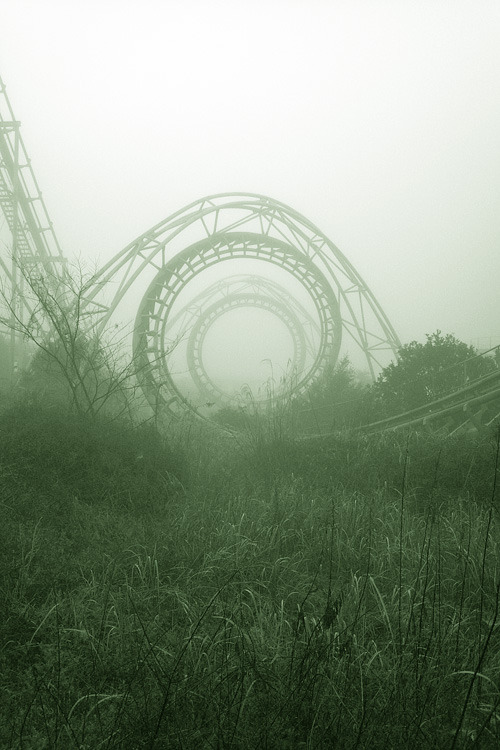
Image via Abandonedography
Subscribe to:
Posts (Atom)