Achievement in Sex-Ed: Helen Mirren
Okay, so what's the deal with Helen Mirren? I mean, clearly she's a stone cold fox, as evidenced by her being cast as The Sexy Co-star in a number of recent movies. And she's funny, as showcased by the not-so-funny-looking trailers for Arthur (in her, and Russel Brand's, defense: I would guess the source material about a billionaire man-baby comes off as a little lame in a post-economic meltdown world, but whatevs, points for trying). She has a banging bod, cheekily on display in bikinis and sundry gowns and eventwear. It's well-established at this point that Helen Mirren is an a-okay kind of gal. So, my question is: Helen Mirren, where have you been all my life? Her first film credit is from 1966, a time when my mom was in elementary school, so she's like O.L.D. for real. Her IMDB page seems to list mostly filmed BBC productions and about 57 variations on Prime Suspect, but that paints only a partial picture of a one-woman zeitgeist.
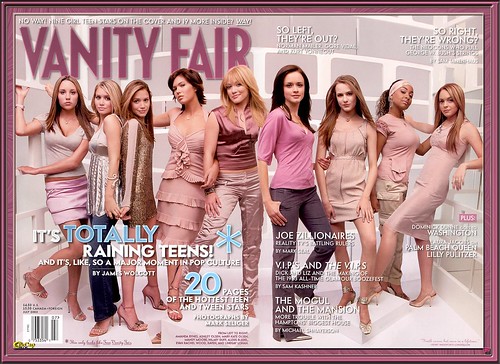
Every few years, people remember that older female acting gigs are sort of tough to come by. By "older," I mean older than 30, maybe 34. It was especially bad a few years ago, when the Olsen twins, Linsday Lohan and their ilk were involved in a Vanity Fair-led minifreakout about little girl actresses and What That Meant. VF ill-advisedly spent an issue fawning over the young'uns, which was less "Wheee! Fun with peers!" and more of a combination of "Oh my god, when can we get back to writing ceaselessly about the Kennedies?" and "creepy uncle who breathes too hard at the kiddie table." Starlets like the ones on the cover of VF do very well for a few years, then they have a series of ill-advised marriages and/or stints in rehab, while actresses wait quietly for HBO to write them a showcase show and go on to win a slew of Emmy awards. Very few women come to prominence as an older actress - most start as a nubile young things, all tank tops and magazine covers, and then go on to become Sigourney Weaver.
So it's cool that Helen Mirren seems different. She hasn't had her breakthrough North American role - I guess she first got noticed in The Queen in 2006, but her flicks like Red could best be described as popcorn movies. She garnered mixed reviews as Prospera in Julie Taymor's The Tempest, a role that took the iconic grizzled wizard role and shaped into a distinctly feminine anger. Still, she hasn't had her defining role yet; I suppose Brits would say that she is Jane Tennison, but I, like 97% of North America, haven't seen it, so I don't know.
I hope that Mirren's pop culture success can be translated into a more varied role market for older actresses. I'm tired of seeing roles like Jane Fonda's in Monster-In-Law, a catty exercise in inter-generational jealousy. TV has upped the ante with roles like Nurse Jackie and The Big C, but as audiences age, they'll want to see themselves on the big screen, too. Mirren is ahead of the curve, but I predict that the actresses who were working in both 1979 and 2011 won't be hurting in fifteen years. And it's cool that this particular job market still seems to have openings for the new(ish) folks.
I hope Mirren, and her status as sex symbol, is a harbinger of thing to come. I, for one, would be comfortable with seeing female sensuality expressed more often and with more age diversity. Seeing ladies like Mirren, and other older/still-sexy broads, teaches us that sexiness comes in all forms. I know Helen Mirren doesn't wake up in the morning and say to herself, "Today I'm going to be a role model," but we consume so many images of youth as equaling beauty; there's something subversive and wonderful about Mirren's decision to market herself as an object of sexual desire, despite the fact that she's past retirement age.
Women are sexy - not just young women, mind you, but women with kids. Women with wrinkles. Women who have gained and lost weight since they were twenty-seven. Women who have gray hair. Women who get a little nip/tuck done, and women who don't. Women who choose to wearing the plunging necklines into retirement, and those who dress more modestly. There are tons of ways to be sexy, and Helen Mirren's version, at 65 and still shakin' her tatas in Kristen Wiig's face, is pretty cool.
Wednesday, April 13, 2011

Saturday, April 9, 2011
Best of Women: Co-operation Makes It Happen
Achievement in Economics: Sara Oliver and Sara Golling
Sara Oliver and Sara Golling aren't household names, but over the last forty years, they've influenced scores of Canadians and helped outfit thousands of mountaineers, college kids, weekend warriors, and adorable little kids. As part of the founding members of Mountain Equipment Co-op (celebrating 40 years in business this year, what what?), they've brought a different model of shopping to the Canadian family, and in the process, helped shape who we are as consumers.
Mountain Equipment Co-op (MEC for short, and the contention over whether it's "Em Eee Cee" or "Meck" has divided families and ruined friendships) was originally envisioned as a knock-off of REI, an American outdoor equipment provider. According to the ridiculously endearing cartoon on their website, MEC was designed to serve the 1970s Vancouver hippies: the cartoon features bebraided young ladies and scraggly-bearded young men, asking, "Hey, why don't we start a co-op just like REI?" Forty years later, MEC has come into its own. Membership exceeds 3 million (in a country with 30 million residents, that's damned impressive), they made more than a quarter-billion dollars last year, and they've built eco-friendly outposts from coast to coast. They're also a super-fun way to kill a couple hours on a weekend; go in, get some technical clothes (dress shirts that dry really fast! Awesome for both mountain biking and nervous interactions with your boss!), try on sunglasses, maybe watch some of the doofs on the climbing wall, and grab a new carabiner for you keys. Sweet!
I rarely write about co-ops for the same reasons I don't write about my family or mention my work on this site: I don't want to shit where I eat. I've lived in a student housing co-op for the past seven years, and being a member has deeply influenced the way I feel about myself as a person. Co-ops are notable because they give members democratic control over their organization, a "perk" lacking in most other business models. They empower members to spend the co-op's money in ways that best suit them. My housing co-op, for example, has a full-time maintenance crew; free laundry for the membership; dining halls and house food plans; and front porches and backyards in the heart of downtown Toronto.
There are lots of different types of co-ops: some, like MEC, are consumer co-ops who negotiate on a member's behalf with suppliers and give more bang for your buying buck. Worker co-ops allow employees of a company to direct its growth, instead of a top-down/boss-only approach. Naomi Klein gives worker co-ops a lot of love in her book The Shock Doctrine: apparently, after a lot of political and economic tumult, worker co-ops have a balm-like effect on economies. It was under the Cooperative Commonwealth Federation's rule in Saskatchewan in the '40s that the Canadian health care system took its first form. Oh, and it's my secret dream to run a restaurant co-op like The Sleepless Goat in Kingston. Secret! Shh!
I know my co-op friends might get starry-eyed for this post while the rest of the world yawns and scratches itself. I get mushy about co-ops because I think they work. So many folks feel powerless and used up by the end of the day. When I think about the jobs I've had, the ones where I worked hardest and felt best about myself have been the ones where I feel proud of what I do. Even if it's waiting tables, if my fellow employees and my bosses and I are all on the same team, it's a good job. I've watched friends endure crappy living arrangements - "roommate" means you bear the brunt of dealing with the issue, including the knowledge that you helped select the source of your misery. But co-ops, with their open membership policies, absolve you of that. Plus, almost every medium to large co-op I've heard of has someone on staff who helps wrangle the inter-member conflict.
In any case, I would argue that most Canadians have some contact with a co-op. Credit unions are wildly popular in Quebec, and the farming industry still has a number of co-operatives, ranging in size from smallish to gargantuan. MEC helped make co-ops part of Canada's economic landscape. And co-ops are part of a thriving democracy - along with unions, they give people the power to govern themselves where they live, buy, work and play. So thanks, MEC. Thanks, Oliver and Golling. Yours in co-operation!
Sara Oliver and Sara Golling aren't household names, but over the last forty years, they've influenced scores of Canadians and helped outfit thousands of mountaineers, college kids, weekend warriors, and adorable little kids. As part of the founding members of Mountain Equipment Co-op (celebrating 40 years in business this year, what what?), they've brought a different model of shopping to the Canadian family, and in the process, helped shape who we are as consumers.
Mountain Equipment Co-op (MEC for short, and the contention over whether it's "Em Eee Cee" or "Meck" has divided families and ruined friendships) was originally envisioned as a knock-off of REI, an American outdoor equipment provider. According to the ridiculously endearing cartoon on their website, MEC was designed to serve the 1970s Vancouver hippies: the cartoon features bebraided young ladies and scraggly-bearded young men, asking, "Hey, why don't we start a co-op just like REI?" Forty years later, MEC has come into its own. Membership exceeds 3 million (in a country with 30 million residents, that's damned impressive), they made more than a quarter-billion dollars last year, and they've built eco-friendly outposts from coast to coast. They're also a super-fun way to kill a couple hours on a weekend; go in, get some technical clothes (dress shirts that dry really fast! Awesome for both mountain biking and nervous interactions with your boss!), try on sunglasses, maybe watch some of the doofs on the climbing wall, and grab a new carabiner for you keys. Sweet!
I rarely write about co-ops for the same reasons I don't write about my family or mention my work on this site: I don't want to shit where I eat. I've lived in a student housing co-op for the past seven years, and being a member has deeply influenced the way I feel about myself as a person. Co-ops are notable because they give members democratic control over their organization, a "perk" lacking in most other business models. They empower members to spend the co-op's money in ways that best suit them. My housing co-op, for example, has a full-time maintenance crew; free laundry for the membership; dining halls and house food plans; and front porches and backyards in the heart of downtown Toronto.
There are lots of different types of co-ops: some, like MEC, are consumer co-ops who negotiate on a member's behalf with suppliers and give more bang for your buying buck. Worker co-ops allow employees of a company to direct its growth, instead of a top-down/boss-only approach. Naomi Klein gives worker co-ops a lot of love in her book The Shock Doctrine: apparently, after a lot of political and economic tumult, worker co-ops have a balm-like effect on economies. It was under the Cooperative Commonwealth Federation's rule in Saskatchewan in the '40s that the Canadian health care system took its first form. Oh, and it's my secret dream to run a restaurant co-op like The Sleepless Goat in Kingston. Secret! Shh!
I know my co-op friends might get starry-eyed for this post while the rest of the world yawns and scratches itself. I get mushy about co-ops because I think they work. So many folks feel powerless and used up by the end of the day. When I think about the jobs I've had, the ones where I worked hardest and felt best about myself have been the ones where I feel proud of what I do. Even if it's waiting tables, if my fellow employees and my bosses and I are all on the same team, it's a good job. I've watched friends endure crappy living arrangements - "roommate" means you bear the brunt of dealing with the issue, including the knowledge that you helped select the source of your misery. But co-ops, with their open membership policies, absolve you of that. Plus, almost every medium to large co-op I've heard of has someone on staff who helps wrangle the inter-member conflict.
In any case, I would argue that most Canadians have some contact with a co-op. Credit unions are wildly popular in Quebec, and the farming industry still has a number of co-operatives, ranging in size from smallish to gargantuan. MEC helped make co-ops part of Canada's economic landscape. And co-ops are part of a thriving democracy - along with unions, they give people the power to govern themselves where they live, buy, work and play. So thanks, MEC. Thanks, Oliver and Golling. Yours in co-operation!
Wednesday, April 6, 2011
Best of Women: Minn Timi Mun Koma!
Achievement in Politics: Jóhanna Sigurðardóttir
This winter, I developed a surprising crush on the Nordic countries. Their European sensibilities, combined with their music scene and a Globe profile on Danish cuisine, left me hungry to visit the Northern countries - snack on their home-made Poptarts, swim in their icy waters, drink their strange brew, and flirt with their beautiful women.
When I started this series, I got an email from a buddy who alerted me to Iceland's Prime Minister, a dame by the name of Jóhanna Sigurðardóttir. He was like, "She's got an impressive resume!" which is true. She's also openly gay, and as such, is the first queer head of state.
Canada's female political leadership leaves much to be desired. We had Kim Campbell, the first woman PM and the person who ruined the Conservative party for years to come. We have Elizabeth May, who is the head of the Green Party - for some reason, I get the sense that May is the kind of person who gets snorted about around the water cooler in the Ignatieff war room. May's persistent me-too attitude regarding her party's place in the Canadian political pecking order is, frankly, to me, a little off-putting. I like the Green party's stance on a lot of issues (hello, I'm a pinko with a bike, of course I dig a party that posits sustainability as a principle), but May's style runs a little high on the ick-scale. In any case, this ain't about me - what I am saying is that Canadian women have precious few role models to look up to. Olivia Chow, maybe the most prominent female member of parliament, is best known for her marriage to Jack Layton, the leader of the NDP and proud owner of a very fine mustache.
(Full disclosure/weird story: I briefly dated a guy who worked at city hall, and I was invited to Jack Layton's house for their annual Christmas party. I accidentally dressed myself up like a prostitute [high leather boots and fishnets], ate 90% of their cheese platter out of sheer nervousness, and watched Jack sing "Bohemian Rhapsody" on their home karaoke machine. It was the zenith and the nadir of my life so far.)
IN ANY CASE. What I'm saying is that it's hard out there for a pimp, if you replace "pimp" with "politician/vagina owner." Dude politicos are free to wander in and out of office, never being noted for anything unless they get caught with underage hookers, are half-black, or once starred as Danny Devito's brother. Those are literally, like, the only reasons male politicians get talked about. Oh, and Rob Ford's a fatty.
But women are still being all "hmmm"ed over. Sarah Palin was a punchline even as she garnered support across the county. Condoleezza Rice got column inches about her shoes, a feat hitherto unmatched by male politicians. And in Canada, if the female political leadership were a landscape, it would be a tundra. This is embarrassing. In a country that's chill with gay marriage and has stopped caring about teenagers toking up in public, we can't get a female leader who can, you know, lead.
So it's no wonder I had to turn abroad to get some womanly leadership. Jóhanna Sigurðardóttir, the lady who runs Iceland, is sort of fascinating. Her Wikipedia photo makes her look like a smart-girl private detective in some screwball HBO comedy, all big lapels and red lips, but she's Iceland's longest-serving member of the Althing (seriously, since 1978! This woman has a literal lifetime's worth of experience), and when she lost her bid for party leadership in 1994, she actually pounded her fists and said, "Minn timi mun koma!" This becomes far more stirring when translated into a language I speak: "My time will come!" Since Icelanders are awesome, this became an iconic phrase.
It's a fact that women get elected less frequently, serve on fewer boards, and aren't as politically powerful as their male counterparts. I hope that my generation changes this, that women who are now in their teens and twenties can look forward to the day that they're elected to city council, to parliament hill, to 24 Sussex Drive. When inclusion in national debates is a given, not a tooth-and-nail battle. When the commentary isn't about what we wear and who we're married to, but what we say and how we lead. Because our time is coming, but I don't know how soon.
This winter, I developed a surprising crush on the Nordic countries. Their European sensibilities, combined with their music scene and a Globe profile on Danish cuisine, left me hungry to visit the Northern countries - snack on their home-made Poptarts, swim in their icy waters, drink their strange brew, and flirt with their beautiful women.
When I started this series, I got an email from a buddy who alerted me to Iceland's Prime Minister, a dame by the name of Jóhanna Sigurðardóttir. He was like, "She's got an impressive resume!" which is true. She's also openly gay, and as such, is the first queer head of state.
Canada's female political leadership leaves much to be desired. We had Kim Campbell, the first woman PM and the person who ruined the Conservative party for years to come. We have Elizabeth May, who is the head of the Green Party - for some reason, I get the sense that May is the kind of person who gets snorted about around the water cooler in the Ignatieff war room. May's persistent me-too attitude regarding her party's place in the Canadian political pecking order is, frankly, to me, a little off-putting. I like the Green party's stance on a lot of issues (hello, I'm a pinko with a bike, of course I dig a party that posits sustainability as a principle), but May's style runs a little high on the ick-scale. In any case, this ain't about me - what I am saying is that Canadian women have precious few role models to look up to. Olivia Chow, maybe the most prominent female member of parliament, is best known for her marriage to Jack Layton, the leader of the NDP and proud owner of a very fine mustache.
(Full disclosure/weird story: I briefly dated a guy who worked at city hall, and I was invited to Jack Layton's house for their annual Christmas party. I accidentally dressed myself up like a prostitute [high leather boots and fishnets], ate 90% of their cheese platter out of sheer nervousness, and watched Jack sing "Bohemian Rhapsody" on their home karaoke machine. It was the zenith and the nadir of my life so far.)
IN ANY CASE. What I'm saying is that it's hard out there for a pimp, if you replace "pimp" with "politician/vagina owner." Dude politicos are free to wander in and out of office, never being noted for anything unless they get caught with underage hookers, are half-black, or once starred as Danny Devito's brother. Those are literally, like, the only reasons male politicians get talked about. Oh, and Rob Ford's a fatty.
But women are still being all "hmmm"ed over. Sarah Palin was a punchline even as she garnered support across the county. Condoleezza Rice got column inches about her shoes, a feat hitherto unmatched by male politicians. And in Canada, if the female political leadership were a landscape, it would be a tundra. This is embarrassing. In a country that's chill with gay marriage and has stopped caring about teenagers toking up in public, we can't get a female leader who can, you know, lead.
So it's no wonder I had to turn abroad to get some womanly leadership. Jóhanna Sigurðardóttir, the lady who runs Iceland, is sort of fascinating. Her Wikipedia photo makes her look like a smart-girl private detective in some screwball HBO comedy, all big lapels and red lips, but she's Iceland's longest-serving member of the Althing (seriously, since 1978! This woman has a literal lifetime's worth of experience), and when she lost her bid for party leadership in 1994, she actually pounded her fists and said, "Minn timi mun koma!" This becomes far more stirring when translated into a language I speak: "My time will come!" Since Icelanders are awesome, this became an iconic phrase.
It's a fact that women get elected less frequently, serve on fewer boards, and aren't as politically powerful as their male counterparts. I hope that my generation changes this, that women who are now in their teens and twenties can look forward to the day that they're elected to city council, to parliament hill, to 24 Sussex Drive. When inclusion in national debates is a given, not a tooth-and-nail battle. When the commentary isn't about what we wear and who we're married to, but what we say and how we lead. Because our time is coming, but I don't know how soon.
Saturday, April 2, 2011
Best of Women: We Dance To The Beat
Achievement in Music: Robyn
Oh man, remember Robyn? Back in like grade seven, when she had that single and she was blonde and Swedish and then she sort of, uh, disappeared? I have a soft spot for one-hit wonders, specifically internationally successful artists who occasionally break through to North American listeners. Chumbawamba? Primo example. We were all "I get knocked down! I get up again! This....this is basically a drinks menu! Awesome!" for a summer, and then they disappeared back into their European hole, back to being anarcho-punks with serious lefty leanings that weren't easier conveyed to radio listeners.
Robyn hasn't gotten serious press since '95, but last year she came out with a blistering triad of synth-dance albums that were an experiment in post-Napster album production. She released acoustic versions of dance songs she hadn't written yet, collaborated with Snoop Dogg and Royksopp, and sort of came back. The culmination album, 2010's Body Talk, is ridiculously good. I mean, dancefloor jams aren't for everyone, but for folks who like their sugar with synth and 808s, it will rock you.
I especially dig the fact that she got experimental with her album structure. In the pop music world, it's rare that we're allowed a glimpse behind the production curtain. Can you imagine Britney releasing her works in progress? Her albums, even if they're released to mixed reviews, are touched by the hands of a thousand producers and a million tweaks, all before fans get their hands on the finished product. Robyn was like, "Ehhhh...eff that. I'm not perfect. Some of these songs will be better as acoustic jams, and some will rock the dancefloor. I'll take it as it comes." Love that! It speaks to a vulnerability, a willingness to be imperfect, that is extremely rare in pop music. The most we're usually offered is an acoustic outtake of a pop princess in sweats, tickling the ivories in an unconvincing bid to show us they are the authors of their own successes, instead of an army of A+R, marketing, production and support people.
Anyone who can release a song with the lyrics, "We dance to the beat of a million bad kissers with clicking teeth" is aces in my books. Her songs are funny, making pop culture references (Deloreans!) while still retaining the nuttiness of an actual honest emotional expression. I know pop music can be personal, but when Robyn belts out the instructional chorus to "Call Your Girlfriend," I get the sense that homegirl might have been there.
Best of all, the video for the hit "Dancing On My Own" is unabashedly angry, which is terribly cool to me. I feel like women in the entertainment industry rarely give themselves permission to express rage, much less through dance. She has fucked-up snaggle teeth and a deconstructed soccer-mom hairdo. I love it. I love that she is honestly human in an industry that does its best to present the world in glossy three-minute chunks. I love that she embraces her damage instead of denying it. I admire her for trying her things, for sticking to her roots, and for expressing herself in a medium that usually only expresses a love for the dancefloor. Tack så mycket, Robyn.
Oh man, remember Robyn? Back in like grade seven, when she had that single and she was blonde and Swedish and then she sort of, uh, disappeared? I have a soft spot for one-hit wonders, specifically internationally successful artists who occasionally break through to North American listeners. Chumbawamba? Primo example. We were all "I get knocked down! I get up again! This....this is basically a drinks menu! Awesome!" for a summer, and then they disappeared back into their European hole, back to being anarcho-punks with serious lefty leanings that weren't easier conveyed to radio listeners.
Robyn hasn't gotten serious press since '95, but last year she came out with a blistering triad of synth-dance albums that were an experiment in post-Napster album production. She released acoustic versions of dance songs she hadn't written yet, collaborated with Snoop Dogg and Royksopp, and sort of came back. The culmination album, 2010's Body Talk, is ridiculously good. I mean, dancefloor jams aren't for everyone, but for folks who like their sugar with synth and 808s, it will rock you.
I especially dig the fact that she got experimental with her album structure. In the pop music world, it's rare that we're allowed a glimpse behind the production curtain. Can you imagine Britney releasing her works in progress? Her albums, even if they're released to mixed reviews, are touched by the hands of a thousand producers and a million tweaks, all before fans get their hands on the finished product. Robyn was like, "Ehhhh...eff that. I'm not perfect. Some of these songs will be better as acoustic jams, and some will rock the dancefloor. I'll take it as it comes." Love that! It speaks to a vulnerability, a willingness to be imperfect, that is extremely rare in pop music. The most we're usually offered is an acoustic outtake of a pop princess in sweats, tickling the ivories in an unconvincing bid to show us they are the authors of their own successes, instead of an army of A+R, marketing, production and support people.
Anyone who can release a song with the lyrics, "We dance to the beat of a million bad kissers with clicking teeth" is aces in my books. Her songs are funny, making pop culture references (Deloreans!) while still retaining the nuttiness of an actual honest emotional expression. I know pop music can be personal, but when Robyn belts out the instructional chorus to "Call Your Girlfriend," I get the sense that homegirl might have been there.
Best of all, the video for the hit "Dancing On My Own" is unabashedly angry, which is terribly cool to me. I feel like women in the entertainment industry rarely give themselves permission to express rage, much less through dance. She has fucked-up snaggle teeth and a deconstructed soccer-mom hairdo. I love it. I love that she is honestly human in an industry that does its best to present the world in glossy three-minute chunks. I love that she embraces her damage instead of denying it. I admire her for trying her things, for sticking to her roots, and for expressing herself in a medium that usually only expresses a love for the dancefloor. Tack så mycket, Robyn.
Tuesday, March 29, 2011
Best of Women: Fashion! Yipee! Sparkles!
Achievement in Fashion Design: Rodarte / Kate and Laura Mulleavy
All right, I'll cop to the fact that leading these awards with a couple of fashion designers is a little like attending the Vegetarian Food Fair with a steak in my purse. But: how many other female fashion designers can you think of? Betsy Johnson? Um...Donatella Versace? For an industry that is dominated by images of women, there are precious few broads in a position of authority. It seems to be all dudes and skinny fifteen year old Ukrainian girls.
In any case, the Mulleavy sisters are the creative team behind Rodarte. In the past few years, they've created a collection based on the vulture, outfitted the dancers in Black Swan, and been pressured to lose weight by Vogue. Their aesthetic isn't slutty or glitzy (Donatella), but rather pretty and textured. They aren't afraid to go a little weird (see: vultures) and yet they still look at the women wearing their clothes as women, not as hangers or cardboard cutouts.
It's no secret that fashion objectifies women, turning them into commodities used as a prop to sell the clothes. Rarely does a strong female force emerge, and when it does, it tends to be a novelty rather than an actual shift in power. There was the much-lauded "Age of the Supermodel," a decade or so of singular names (Naomi, Cindy, Linda, etc.) who were considered huge assets. But...to who? The fashion houses that used their images to sell their product? The magazines that put them on the cover so that their issues would move? They made millions of dollars, yes, but you would be hard-pressed to figure out how they raked it in while today's models are interchangeable alien heads with stick bodies.
In fashion, women tend to be relegated to the sidelines - quick, name me one prominent fashion photographer who could also give birth? Or a designer who isn't also a model-actress hyphenate? We have Vogue's indomitable Anna Wintour, but even she does her damnedest to propogate the image of sylph-like teenagers as the sole vision of acceptable beauty. Her annual "Shape" issue is a parody of real-life bodily diversity: the variations run the gamut from "thin" to "petite" to "short" to, um, "pregnant." Like, what?
Fashion is frivolous, sure, but everybody wears clothes. We choose our looks based on how we want to present ourselves to the world - sexy cowgirl? Prim and proper? Slightly depressed? - and even though most of us can't afford/aren't interested in the highest-end fashion, its influence trickles down to what we put on our bodies every day. We receive so many cues about bodies, about sexuality, about socioeconomic status, about youth, from the clothes we wear and see others wearing.
So when I see a pair of sisters creating beautiful, interesting, challenging clothes, it's a good thing. I like their weirdness. I admire their unwillingness to compromise. Most of all, I adore that, despite the fact that they are simultaneously successful and so outside the box.
All right, I'll cop to the fact that leading these awards with a couple of fashion designers is a little like attending the Vegetarian Food Fair with a steak in my purse. But: how many other female fashion designers can you think of? Betsy Johnson? Um...Donatella Versace? For an industry that is dominated by images of women, there are precious few broads in a position of authority. It seems to be all dudes and skinny fifteen year old Ukrainian girls.
In any case, the Mulleavy sisters are the creative team behind Rodarte. In the past few years, they've created a collection based on the vulture, outfitted the dancers in Black Swan, and been pressured to lose weight by Vogue. Their aesthetic isn't slutty or glitzy (Donatella), but rather pretty and textured. They aren't afraid to go a little weird (see: vultures) and yet they still look at the women wearing their clothes as women, not as hangers or cardboard cutouts.
It's no secret that fashion objectifies women, turning them into commodities used as a prop to sell the clothes. Rarely does a strong female force emerge, and when it does, it tends to be a novelty rather than an actual shift in power. There was the much-lauded "Age of the Supermodel," a decade or so of singular names (Naomi, Cindy, Linda, etc.) who were considered huge assets. But...to who? The fashion houses that used their images to sell their product? The magazines that put them on the cover so that their issues would move? They made millions of dollars, yes, but you would be hard-pressed to figure out how they raked it in while today's models are interchangeable alien heads with stick bodies.
In fashion, women tend to be relegated to the sidelines - quick, name me one prominent fashion photographer who could also give birth? Or a designer who isn't also a model-actress hyphenate? We have Vogue's indomitable Anna Wintour, but even she does her damnedest to propogate the image of sylph-like teenagers as the sole vision of acceptable beauty. Her annual "Shape" issue is a parody of real-life bodily diversity: the variations run the gamut from "thin" to "petite" to "short" to, um, "pregnant." Like, what?
Fashion is frivolous, sure, but everybody wears clothes. We choose our looks based on how we want to present ourselves to the world - sexy cowgirl? Prim and proper? Slightly depressed? - and even though most of us can't afford/aren't interested in the highest-end fashion, its influence trickles down to what we put on our bodies every day. We receive so many cues about bodies, about sexuality, about socioeconomic status, about youth, from the clothes we wear and see others wearing.
So when I see a pair of sisters creating beautiful, interesting, challenging clothes, it's a good thing. I like their weirdness. I admire their unwillingness to compromise. Most of all, I adore that, despite the fact that they are simultaneously successful and so outside the box.
Saturday, March 26, 2011
Sisters Are Doing It For Each Other
I've written before about weird women, and my terrifyingly awesome female friends, and girl crushes, and all many of girl/women-related hoo-ha. This website is virtually awash in estrogen, just streaming through the intertubes in an attempt to girly up the cybernauts (or something?). Unlike the internet's collective spazz attack about Wired's first-ever cover girl, I'm totally down with women on the web. Remember Dot from Reboot (that show was indisputably bad-ass, by the way)? Like that, but less green.
Last week I stumbled on some girl's blog entry from 2006 detailing all her heroines, a concept that I'm super enamored with...except her girl heroes were all models and actresses. No female fashion designers, no lady writers, no powerful CEOesses. I know that a certain young-women demographic are more likely to be into Sofia Coppola than Sofia Kovalevskaya, which is a legitimate stance to be taking and I'm not judging or anything. But the fact that most of the famous women out there are lauded because they're pretty or do interesting things in front of a camera is kind of sucky.
In the spirit of expanding that which women can be considered awesome for, I propose the inaugural Kaitlyn Kochany Awards for Lady Awesomeness. Aiming to explode the categories in which women are usually celebrated - being professionally good-looking - I'd venture forth with a series of other, less usual categories. What do these women win? A healthy admiration from yours truly and, if they ever come to Toronto, a burger and beer from a bistro of their choice. Who could say no to that?!
So over the next few weeks, I'll be lauding the ladies I feel are leading the way for a new generation of creative types. The writers and fashion designers, the politicas and the producers, the drag queens and activists. I'll try to avoid the women who've risen to fame through the deeds of their husbands/lovers - no Jessica Seinfelds, thanks. Maybe some women in the entertainment industry, because hey - we're all basically obsessed with that anyway! But there are plenty of women who create nuggets of pop culture who can retain their sense of integrity.
Join me as a I walk their streets, read their blog posts, and ignore the models and "actresses" who make their living pimping out the female form without doing anything to advance a woman's mind. As the song says, sisters are doing it for themselves - so let's toss our bras in the air, light our Capri cigarettes, and dance til we get gray hairs.
Last week I stumbled on some girl's blog entry from 2006 detailing all her heroines, a concept that I'm super enamored with...except her girl heroes were all models and actresses. No female fashion designers, no lady writers, no powerful CEOesses. I know that a certain young-women demographic are more likely to be into Sofia Coppola than Sofia Kovalevskaya, which is a legitimate stance to be taking and I'm not judging or anything. But the fact that most of the famous women out there are lauded because they're pretty or do interesting things in front of a camera is kind of sucky.
In the spirit of expanding that which women can be considered awesome for, I propose the inaugural Kaitlyn Kochany Awards for Lady Awesomeness. Aiming to explode the categories in which women are usually celebrated - being professionally good-looking - I'd venture forth with a series of other, less usual categories. What do these women win? A healthy admiration from yours truly and, if they ever come to Toronto, a burger and beer from a bistro of their choice. Who could say no to that?!
So over the next few weeks, I'll be lauding the ladies I feel are leading the way for a new generation of creative types. The writers and fashion designers, the politicas and the producers, the drag queens and activists. I'll try to avoid the women who've risen to fame through the deeds of their husbands/lovers - no Jessica Seinfelds, thanks. Maybe some women in the entertainment industry, because hey - we're all basically obsessed with that anyway! But there are plenty of women who create nuggets of pop culture who can retain their sense of integrity.
Join me as a I walk their streets, read their blog posts, and ignore the models and "actresses" who make their living pimping out the female form without doing anything to advance a woman's mind. As the song says, sisters are doing it for themselves - so let's toss our bras in the air, light our Capri cigarettes, and dance til we get gray hairs.
Wednesday, March 23, 2011
Take The Car
8:19: Leave the house. Yeah, yeah, I know I'm running a little late, but I woke up with yesterday's staff-meeting reprimand about using the internet for personal reasons still ringing in my ears, and I'm feeling a little blue. Right before I leave, I open the blinds to find a winter wonderland outside. It is, of course, March 23 and spring should have sprung by now, dudes.
8:26: Arrive at Spadina station to find that both token machines are out of order. The guy in front of me managed to jam it with his super-muscular toonie, and of course it's one of, like, three platforms in the entire system with no man in a box to distractedly give change. I leave in a huff.
8:27: I am, like, jogging to the next station over, which happens to be the main entrance to Spadina. It's only a few minutes away, but I'm seething. It's snowing so hard, I can barely see the other side of the road, and cars are trying to deal with roads that offer about as much traction as a slip-'n'-slide. It's safe to say that nobody is in a good mood right now.
8:33: Arrive at Spadina station and tell the man in the box that the machines at the North entrance are busted. He literally says, "Yeah, that's a pain in the ass, isn't it?" in a commiserating tone of voice. I'm like, YEAH IT IS and am tempted to ask for a free fare, but have been frowning for the last twenty minutes and my flirt/cute mode is totally not coming out to play.
8:36: Taking the other entrance actually means I have to switch trains, which, during a snowstorm and in rush hour, is about as appealing as touching the third rail. The first train whooshes into the station, the people get off, and then the conductor just closes the doors. There are people literally clawing their way in through the sliding doors for almost a full minute. I'm not sure why the driver thought that was a good idea, but my heart is racing. It's like watching people fistfight a train.
8:40: Get on the effing train, along with 3000 other people. I usually adore the TTC, because I think transit is important and belongs in urban centers, but right now, I'm just about ready to burn this mother to the ground. I mean, if it's possible to do that, since we're already underground...?
8:47: Arrive at Osgoode station. The stairs to street level are conveniently made of tile; in the snow, they become a scary death mountain. I am gripping the handrail and wondering why they don't install that weird grippy step business that's everywhere on, like, playgrounds and construction sites.
8:48: At the streetcar stop, I'm shifting my weight from one foot to the next in an attempt to stay warm. I'm failing. The guy next to me with the six (!! Also, I am officially an old person) facial piercings has perfected his thousand-yard stare to the point where I'm fairly sure he can see Brampton. I begin to wonder how people do this day in, day out: I was riding my bike last week, and while that comes with its own set of challenges, there isn't this sense of grinding terribleness. Everything about the TTC is delays and setbacks, zero communication and nonsensical procedures. I am, of course, in a terrible mood, but it occurs to me that the TTC needs so much in the way of improvement.
For example, in DC, the system uses a fare protocol that charges you based on the distance traveled. Go one stop? You pay, like, 80 cents. Riding to the end of the line will cost you more, but them's the breaks. The MTA in New York has a refillable metropass that allows its users to put on as much or as little money as they can afford, and doesn't expire within a certain timeframe (what up, monthly pass?) San Fransisco's transit system features the BART, which folds the outlying suburbs closer to the downtown core and costs less than a Toronto burrito.
I know it's become somewhat fashionable to pick on the TTC, but man, it's hard to enjoy yourself on that system. The stations are uniformly ugly, the coverage is spotty, the debates about where service should be pushed to are annoying, and it's expensive, both on the clock and the wallet. I'm looking forward to spring because I get to sleep in - on a bike, I can get to work in under half an hour; on the so-called Rocket, I'm lumbering there in about 45 minutes. The "historic streetcars" that run along Queen Street are traffic lummoxes (can you not imagine a Chicago-style El running over the Queen Street rooftops? I dare you. Fall in love with the idea), and the building that desperately needs to happen to support the influx of downtown condo-dwellers has been endlessly debated because subways, though necessary, are scary. Too expensive! So disruptive! Meanwhile, the city stalls.
8:59: I am at Yonge Street. I am now late for work.
9:07: I finally get to the office. I'm red-faced from hustling the last block, and pretty pissed that my commute took almost an hour. I don't feel ready to face the day; I feel like I need a nap, a back rub, and a shower. I curse this never ending winter - when the snow melts, I'm hopping off this infernal transit system and never looking back.
5:15: Deep sigh as I deposit my three loonies into the farebox.
8:26: Arrive at Spadina station to find that both token machines are out of order. The guy in front of me managed to jam it with his super-muscular toonie, and of course it's one of, like, three platforms in the entire system with no man in a box to distractedly give change. I leave in a huff.
8:27: I am, like, jogging to the next station over, which happens to be the main entrance to Spadina. It's only a few minutes away, but I'm seething. It's snowing so hard, I can barely see the other side of the road, and cars are trying to deal with roads that offer about as much traction as a slip-'n'-slide. It's safe to say that nobody is in a good mood right now.
8:33: Arrive at Spadina station and tell the man in the box that the machines at the North entrance are busted. He literally says, "Yeah, that's a pain in the ass, isn't it?" in a commiserating tone of voice. I'm like, YEAH IT IS and am tempted to ask for a free fare, but have been frowning for the last twenty minutes and my flirt/cute mode is totally not coming out to play.
8:36: Taking the other entrance actually means I have to switch trains, which, during a snowstorm and in rush hour, is about as appealing as touching the third rail. The first train whooshes into the station, the people get off, and then the conductor just closes the doors. There are people literally clawing their way in through the sliding doors for almost a full minute. I'm not sure why the driver thought that was a good idea, but my heart is racing. It's like watching people fistfight a train.
8:40: Get on the effing train, along with 3000 other people. I usually adore the TTC, because I think transit is important and belongs in urban centers, but right now, I'm just about ready to burn this mother to the ground. I mean, if it's possible to do that, since we're already underground...?
8:47: Arrive at Osgoode station. The stairs to street level are conveniently made of tile; in the snow, they become a scary death mountain. I am gripping the handrail and wondering why they don't install that weird grippy step business that's everywhere on, like, playgrounds and construction sites.
8:48: At the streetcar stop, I'm shifting my weight from one foot to the next in an attempt to stay warm. I'm failing. The guy next to me with the six (!! Also, I am officially an old person) facial piercings has perfected his thousand-yard stare to the point where I'm fairly sure he can see Brampton. I begin to wonder how people do this day in, day out: I was riding my bike last week, and while that comes with its own set of challenges, there isn't this sense of grinding terribleness. Everything about the TTC is delays and setbacks, zero communication and nonsensical procedures. I am, of course, in a terrible mood, but it occurs to me that the TTC needs so much in the way of improvement.
For example, in DC, the system uses a fare protocol that charges you based on the distance traveled. Go one stop? You pay, like, 80 cents. Riding to the end of the line will cost you more, but them's the breaks. The MTA in New York has a refillable metropass that allows its users to put on as much or as little money as they can afford, and doesn't expire within a certain timeframe (what up, monthly pass?) San Fransisco's transit system features the BART, which folds the outlying suburbs closer to the downtown core and costs less than a Toronto burrito.
I know it's become somewhat fashionable to pick on the TTC, but man, it's hard to enjoy yourself on that system. The stations are uniformly ugly, the coverage is spotty, the debates about where service should be pushed to are annoying, and it's expensive, both on the clock and the wallet. I'm looking forward to spring because I get to sleep in - on a bike, I can get to work in under half an hour; on the so-called Rocket, I'm lumbering there in about 45 minutes. The "historic streetcars" that run along Queen Street are traffic lummoxes (can you not imagine a Chicago-style El running over the Queen Street rooftops? I dare you. Fall in love with the idea), and the building that desperately needs to happen to support the influx of downtown condo-dwellers has been endlessly debated because subways, though necessary, are scary. Too expensive! So disruptive! Meanwhile, the city stalls.
8:59: I am at Yonge Street. I am now late for work.
9:07: I finally get to the office. I'm red-faced from hustling the last block, and pretty pissed that my commute took almost an hour. I don't feel ready to face the day; I feel like I need a nap, a back rub, and a shower. I curse this never ending winter - when the snow melts, I'm hopping off this infernal transit system and never looking back.
5:15: Deep sigh as I deposit my three loonies into the farebox.
Subscribe to:
Posts (Atom)